The Afternoon I Finally Surrendered
For years I called endurance faith — I prayed, but I kept my hands on the wheel. Then, in a campus parking lot on a cold February afternoon, my degree nearly finished and my life still hollow, I ran out of strength to steer. That’s where God had been waiting all along.

There comes a point when trying no longer feels brave.
For a long time, I believed endurance was faith. If I could just keep going, keep believing, keep standing, surely that counted for something. I prayed, but I also decided. I trusted God — as long as I remained the one steering my life. I told Him I was willing, and I kept the authority over outcomes.
Eventually the self-effort of that “I’ll do it myself” approach runs empty. I did not reach surrender through courage or clarity. I arrived there tired — worn thin by my own authorship, at the end of what I could manage, explain, or improve. And in that quiet exhaustion I finally saw the truth of it: I hadn’t been resisting God out of defiance. I’d been resisting Him out of fear — fear of what obedience might require if I stopped negotiating.
The exhaustion of self-rule
There comes a point when you can no longer stand the life you’re living. You wake up one day and realize everything you’ve accomplished still hasn’t brought the relief you expected — just relentless disappointment, repeated relational failure, self-betrayal, and a deep mistrust of your own judgment after years of trying everything your way. A restlessness that will not resolve, humming under the ordinary tasks of daily life.
I had tried every tool I had to find joy, laughter, peace. I wasn’t doing wrong for the thrill of it. I was chasing the happiness promised in movies and magazines:
If you’re attractive enough, the right person will fall for you.If you’re sexy enough, they’ll commit to you forever.If you make enough money, your worries will end.If you’re successful enough, you’ll be respected.If you’re stronger, smarter, faster than everyone else, you’ll secure your place.
Every one of those promises is a lie. I know because I tried them all — I even found what the world calls success — and none of them delivered. Life felt lifeless anyway: dry, empty, disappointing. That is the desperation and loneliness of self-rule, and that is exactly where I found myself.
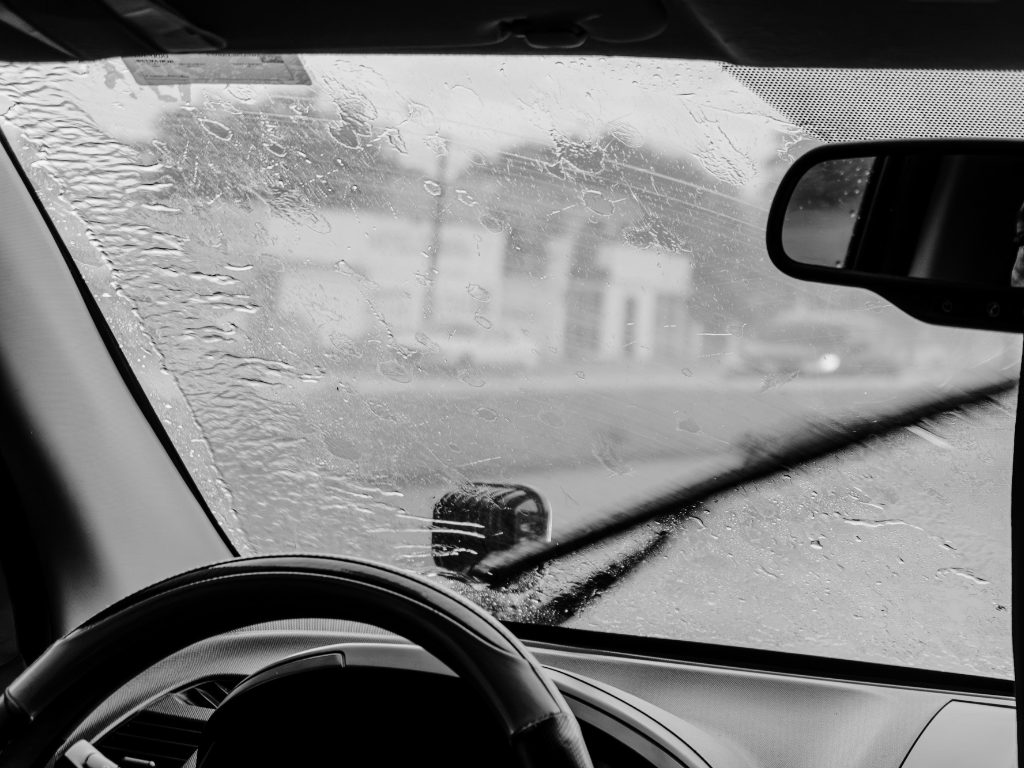
It was a cold February day, driving to campus. I was weeks away from completing my degree and moving back to Kansas City to begin my career. That milestone should have sparked joy. Instead, I realized I was completely empty.
There was no shortage of grief in my life. My first husband, Drew, had devoured my empathy and trust and left behind shame, confusion, and debt I had no means to pay. While my children were with their father and grandmother, untruths about me were spoken to them — shaping their understanding of who I was and which of their parents could be trusted. Those narratives were built to maintain control and secure allegiance, whatever they cost the children’s hearts.
I carried that grief daily, all while trying to meet the demands of an architecture program — studio hours, overlapping deadlines, weekends claimed by coursework. At the same time I was driving hours for visitation with my children, and often losing that precious time to Drew’s deliberate absence or evasion. It was maddening, and I was burning out faster than I could admit.
When school forced me to stay and work weekends, my absence from my children was met with condemnation from Drew and his mother, Drucilla. My love as a mother was questioned. My character was judged. Words were spoken to me that cut deep — and worse were the words I could only imagine being spoken to my children, with no way to know what was said or how to protect their hearts. And because Drew and Drucilla lived closer to my parents than I did, they had access to my own family, who were vulnerable to their persuasion. Soon the condemnation echoed from the very places that should have been safe. I couldn’t win.
Living the world’s pattern — giving myself fully to men who demanded everything and returned nothing — had left me empty, despairing, and self-loathing. Life hadn’t followed the fairy tale, and I wasn’t enough to force it to. I had finally achieved everything I’d been pushed toward since childhood: a degree, a profession, independence. It felt hollow. I felt dirty — the kind of dirty that settles into your sense of who you are. I was clawing at the walls of another pit I could not escape, and no matter how resilient or resourceful I believed myself to be, I could not pull myself out. I was out of answers.
The white flag
Sitting in the campus parking lot as the amber light faded on that cold winter day, I gave up. I remember thinking, I don’t want my life anymore. Not the way I’ve been living it.
And in that moment, I realized I wasn’t alone. Through the entire inner dialogue, God was there — not condemning, not distant. Present. I was waving a white flag, and not out of cowardice. I was simply out of ammunition. Out of ideas, out of strength, out of my own way. I had tried everything I knew to try, and the only way left was His. I surrendered.
For years, He had been calling me back to Him and to His church. I had resisted with everything in me — my fears shaped by earlier experiences in that space, ones that taught me I wasn’t good enough and that grace was theoretical, not personal. Returning felt like walking straight back into judgment. But I was desperate enough to risk it. If going back to church mattered this much to Him, maybe there was something I hadn’t yet seen.
His invitation came as a persistent thought, a quiet knowing — gentle, but insistent — and it felt like the only way forward. And when I sensed His presence there in the car, it wasn’t new. My attention was. He knew everything I had done and everything I had endured, and He did not condemn me. He just waited.
Surrender did not feel humiliating. The humiliation was everything I’d felt before surrender. After, there was peace — the sense that the bleeding would finally stop. My prayers were not eloquent:
“I don’t know what I’m doing.”“I can’t fix this.”“I don’t trust myself.”“If You want my life, You can have it.”“I’m done choosing.”
I did resist one last time, in a practical way — I told myself it would all start when I moved back to Kansas City. A new city, a new version of myself, less risk of being exposed. But obedience didn’t stay theoretical forever. The first step was walking into a church alone, sitting in the back, leaving quietly, and coming back the next week. It wasn’t comfortable. It was obedience.
What surrender actually bought me
Today, when I look back at that woman in the parking lot, I feel gratitude for her surrender and grief for the years she spent running. And I know this now: following God is the only path that has ever led me to peace, rest, and life.
God does not force obedience. He allows wandering; He allows rebellion — not with anger, but with patience, and with sorrow for the consequences we’ll face out there on our own. Rescue requires surrender. Not perfection, not instant maturity. Just willingness.
He was in that car with me that day, just as He had always been, waiting for the moment I was finally willing. And He lifted me out of the pit I had dug for myself — again. The psalmist could have been writing my afternoon:
“I waited patiently for Yahweh. He turned to me, and heard my cry. He brought me up also out of a horrible pit, out of the miry clay. He set my feet on a rock, and gave me a firm place to stand.” — Psalm 40:1–2 (World English Bible)
I did not lose myself when I surrendered, the way I had feared. I found the life I had been starving for — more abundantly than words can hold. Thank you, Jesus.
Thank you for taking this walk with me. If this story stirs something in you — if you find yourself empty, tired, and lifeless — consider what God might be asking you to lay down. Not to punish you. To relieve you. To replace survival with abundant life.
Scriptural Framework
Luke 15:4–7 — God’s patient pursuit and repeated rescue.
Proverbs 3:5–6 — Relinquishing authorship and direction.
Psalm 40:1–3 — Waiting in the pit and being lifted out.